🧬 The Hormone That Runs Your Entire Growth System
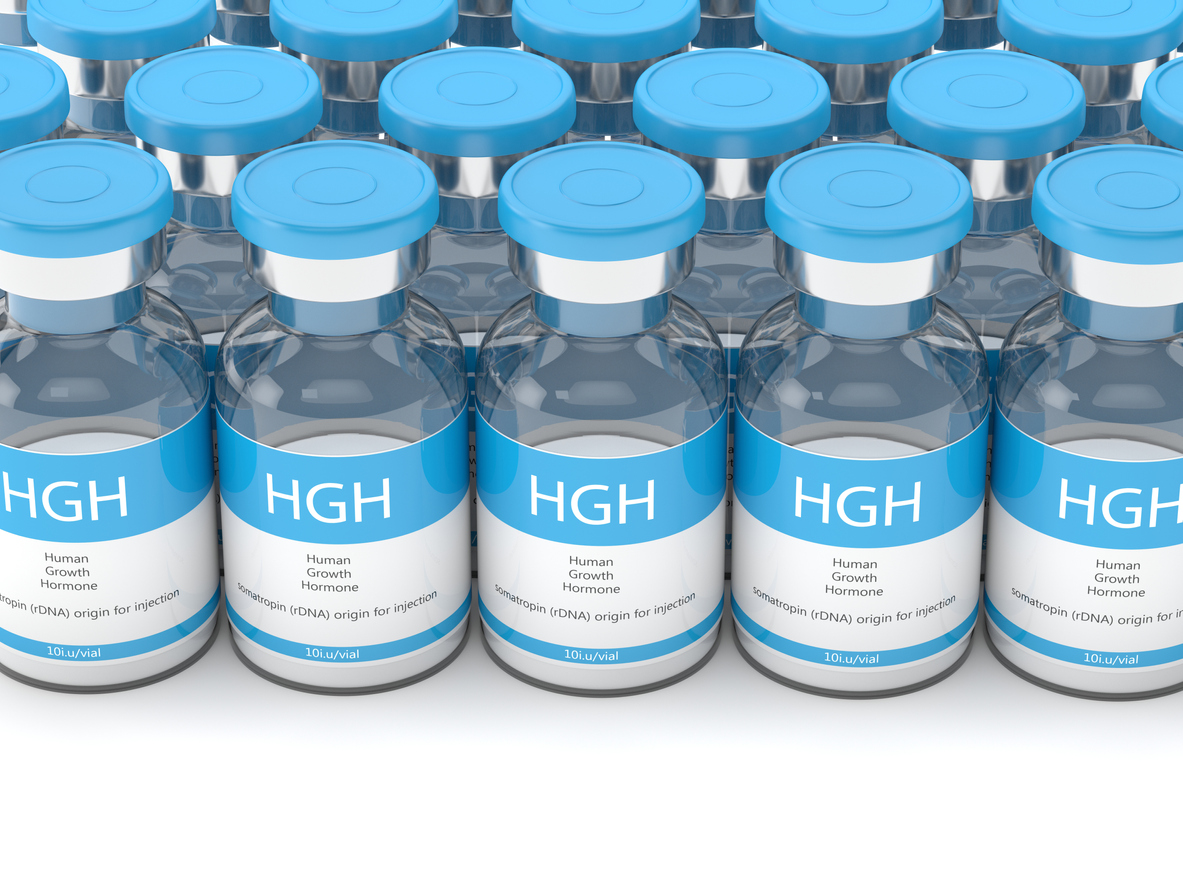
Human Growth Hormone (HGH) is not some random supplement. It is a **core biological command signal** produced by the pituitary gland that controls growth, regeneration, and metabolic function.
Exogenous HGH is synthetic human growth hormone, a peptide made up of 191 amino acids, that’s injected into the body to replicate the natural growth hormone produced by your pituitary gland. It helps boost muscle development, fat burning, recovery, bone growth, and even improves skin health by promoting cell regeneration. Unlike oral supplements, exogenous HGH is directly absorbed into the bloodstream for maximum effectiveness. It’s commonly used by athletes, bodybuilders, and those seeking anti-aging benefits, but it’s important to use it right and manage the doses to avoid potential side effects.
Best Peptides to mimic HGH
- GHRH → tells your body to release HGH
- MK677 → Increases Apetite And mimics HGH in body
- CJC1295 → CJC-1295 is a synthetic, long-acting analogue of growth hormone-releasing hormone (GHRH) developed to increase growth hormone (GH) and IGF-I levels. It is used in anti-aging and wellness contexts for potential benefits like improved sleep, fat loss, and muscle growth, acting by stimulating the pituitary gland. It is often paired with Ipamorelin to create a sustained, pulsating release of growth hormone.
- Ipamorelin → Paired With CJC1295
- Ipamorelin → Paired With CJC1295
HGH
 Its indirect effects are in the process we described in the section above. When HGH travels to the liver, one of the results of its pass through the liver is the livers secretion of IGF-1.
When this IGF-1 is secreted, it stimulates proliferation of chondrocytes (cartilage cells), which result in bone growth. It also plays a part in stimulating both the proliferation and differentiation of myoblasts (the precursor to skeletal muscle fibers). IGF-1 also stimulates amino acid uptake and protein synthesis in muscle and other tissues. Other tissues (muscle, etc.) are acted on by the presence of HGH, also inducing their release of IGF-1.
HGH stimulates protein anabolism in many tissues. This reflects increased protein synthesis, decreased oxidation of proteins, and increased amino acid uptake.
As mentioned above, HGH enhances fat utilization by stimulating triglyceride breakdown and oxidation in fat cells (adipocytes).
HGH can affect the function of other hormones. HGH can suppress the abilities of insulin to stimulate the uptake of glucose in tissues and enhance glucose synthesis in the liver,
though administering HGH actually stimulates insulin secretion and can create a state of hyperinsulinemia. This combination can lead to decreased insulin sensitivity, which in turn can lead to hyperglycemia. HGH can in the right circumstances also have a slight inhibitory effect on the function of our thyroid hormones (and actually vice versa as well), though this varies greatly from individual to individual. The vast majority of users have no need to worry about this at all. Others wishing to increase their metabolism or enhance certain of HGH’s functions may wish to consider low dose thyroid to their HGH cycle. We’ll offer some strategies later in this guide.
So, we are looking at a hormone that can assist with maintenance and healing of most of the body’s systems, can create new cartilage, bone, and muscle cells, can assist with protein uptake, decrease the oxidation of proteins,
and can accelerate the rate at which fat is utilized. This paints the picture of the excitement that follows HGH. How then do we utilize this to our advantage? Let’s take a look at some strategies.
How To Inject?
1.) Take an alcohol swab and swab the stopper of both your HGH vial and the vial of the dilutent (BW, sterile water, B12).2.) Take a 3cc syringe with a 23 or 25 gauge needle (1" or 1.5") and draw up and amount of your preferred dilutent. The amount isn't critical, other than making sure you know exactly how much you have used. The best rule of thumb is choose an amount that will make measuring the final product easy example- 1ml(cc) per 10 IU vial of HGH would mean each 10 mark on a U100 slin syringe would equal 1 IU of HGH
2ml(cc) added to a 10 IU vial of HGH would mean that the 20 mark on a U100 syringe would equal 1 IU of HGH 3ml(cc) added to a 10 IU vial of HGH would mean that the 30 mark on a U100 syringe would equal 1 IU of HGH
3.) Take this syringe with the dilutent and push it into the vial of lyophilized powder, angling so that the needle touches the side of the vial, and avoiding shooting the dilutent directly on the lyophilized powder. Make it run slowly down the side of the vial (don't let it forcefully rush in).
4.) After all of the dilutent has been added to the HGH vial, gentling swirl (do NOT agitate or violently shake the vial) until the lyophilized powder has dissolved and you are left with a clear liquid. The HGH is now ready for use. Store your now reconstituted HGH in the refrigerator. If you used BW to reconstitute it will be good for three weeks. If you used sterile water, it will be good for about 5 days.
Side Effects
Won't Work if growth plates are closedCan cause acrogamy and nose growth
Can cause organ growth in extreme causes
Headaches , Nausea
Won't Give More then 3 inches of extra height
IGF 1 The god of everything
IGF-1 its a growth factor that is made up mostly in your liver in response to growth hormone. Basically growth hormone is released by the brain in response on things like intense exercise, sleep, hunger and low blood sugar. The growth hormone travels through the blood and it binds to receptors in the liver cells and some signaling within those cells, the result is the prodcution of IGF-1 from the liver.IGF-1 binds to some binding proteins that stabilize it so it can stick around the blood longer rather than getting cleared away immediately. IGF-1 can be made outside the liver to, it´s made directly in the muscles in response to mechanical stress like lifting weights. In the muscles this version of IGF-1 is called mechano growth factor, it´s not exactly the same it is called splice variant of IGF-1 (but has similar effects). An imporant thing to know is since mechanic growth factor or IGF-1 can be made locally in tissues like muscles, this means the IGF-1 blood levels don´t tell the full story about it, because you could have low IGF-1 in your blood but high IGF-1 in your muscles.
IGF-1 is also regulated by the thyroid hormones nutrition status which we´ll get into it later.
How It Works?
So, by inhibiting myostatin IGF-1 kind of pulls back the limiter of muscle mass growth.IGF-1 also stimulates satellite cells to proliferate and differentiate. Satellite cells are stem cells in the muscle tissue and they add nuclei to the muscle fibers and more nucleai means more potential to muscle protein synthesis, since the nuclei are what gives the instructions to the ribosomes to make muscle proteins.
IGF-1 reduces muscle protein breakdown by inhibiting tha pathway called the ubiquitin-proteasome pathway, you don´t need to know what that means, but basically you experience less muscle loss during intense training or caloric deficits.
That´s why IGF-1 is basically banned from competition, taking it would give you an unfair advantage. But in this post we´re interested in natural optimization of IGF-1.
IGF-1 also grows your bones by promoting proliferation and bone elongation in the growth plates. So it´s crucial throughout the growth spurts during puberty, very important for getting taller and general frame-growth of your skeleton. Specially in adults it promotes bone remoleing and bone density. IGF-1 also enhances insulin sensitivity and increases fat metabolism. So more glucose gets sucked up into the muscles, that´s what insulin does. And the body switches more towards burning fat for energy instead of carbs. It is important to note altough IGF-1 promotes fat metabolism it´s mostly growth hormone that does that. Beyond all the beneficts talked, also has another buncho of beneficts as improving the tymus function, which is an inmune organ in your chest that makes the white cells used to fight infections. Improves your skin health and appearance like having less wrinkles and seems to protect the mitochondria.
Cycle
Duration: Often cycled for 4 to 6 weeks, followed by a break, to prevent receptor desensitization.Dosage:doses ranging from 100-200mcg per day.
Administration: Typically administered via subcutaneous injections, often timed around training sessions to maximize local muscle uptake.